
Parole, Probation, PRCS
Post-release supervision is not one Sonoma County database. Parole is state supervision through the California Department of Corrections and Rehabilitation, Division of Adult Parole Operations. Probation is local court supervision through the Sonoma County Probation Department Adult Division. PRCS applies to certain people released from state prison but supervised locally by probation. Mandatory supervision is a split sentence: part of the sentence is served in custody and part in the community under probation supervision.
| Release path | Supervising agency | Best public confirmation |
|---|---|---|
| State-prison parole | CDCR Division of Adult Parole Operations, including the Santa Rosa parole unit when assigned locally | CDCR CIRIS, DAPO contact, BPH records, and the sentencing court case |
| County probation | Sonoma County Probation Adult Division | Sonoma Superior Court sentencing, revocation, or termination entries |
| PRCS | Sonoma County Probation after a qualifying state-prison release | CDCR release/transfer information plus probation or court confirmation |
| Mandatory supervision | Sonoma County Probation under a split county sentence | Sonoma Superior Court judgment, minute order, and probation records where releasable |
Definition note. A released person is no longer in the custody system that released them, but supervision can continue. A jail release does not prove probation ended, a prison release does not prove parole ended, and a transfer is not the same thing as release to the community.
Verify Sonoma Supervision
The anchor question is narrow: is this released Sonoma County person on parole, probation, PRCS, or mandatory supervision, and how can that be checked? Start with the release source, then move to the agency that would supervise the next legal status.
- Check the Sonoma Sheriff's Incarcerated Person Search only to see whether the person is still in county jail custody. The Sheriff's own scope is current custody, so absence from that search is not final proof of supervision status.
- Use the Sonoma Superior Court Case Portal for the criminal case. Sentencing, revocation, custody-credit, probation, dismissal, and termination entries usually explain why the jail release happened.
- For state-prison cases, search CDCR CIRIS and compare the CDCR number, commitment county, location, and any parole or Board of Parole Hearings information shown.
- For local supervision, contact Sonoma County Probation Adult Division or use the court case to identify whether probation, PRCS, or mandatory supervision was ordered.
- For possible failure to report, missed court, or violation activity, check the Sonoma Sheriff's Warrant Search and then verify with the court or supervising agency.
- Use VINE Inmate Check for custody-change alerts, especially when the person is still in a participating custody record or has just transferred.
If documentary proof of a release is needed, the path usually returns to the Sheriff's release record or the court disposition covered on the Sonoma County released inmates home page.
Local Supervision Offices
Sonoma has two named supervision contacts that matter most after release. CDCR DAPO handles state parole. Sonoma County Probation handles adult probation, PRCS, mandatory supervision, work release, and local community-supervision programming described by the Probation Adult Division.
CDCR DAPO Santa Rosa Parole Unit
3222 Airway Drive, Suite A, Santa Rosa, CA 95403
Phone: (707) 576-2200
State agency: CDCR Division of Adult Parole Operations
Sonoma County Probation Adult Division
Phone: (707) 565-2149
Fax: (707) 565-2504
Agency page: Adult Division
Warrants After Release
A released person can be outside jail custody and still have an unresolved court or supervision problem. Sonoma's adult warrant-search channel is therefore part of the post-release workflow, not a release list. The Sheriff's Warrant Search page says warrants issued by Sonoma County Superior Court Adult Division are available online and that the information is updated each day at approximately 5 PM.
Use that search carefully. An active warrant does not identify the original release date, and absence from the warrant search does not prove a person is complying with every supervision term. It is a status signal to reconcile with the court case, probation or DAPO contact, and any new jail booking.
BPH Hearing Records
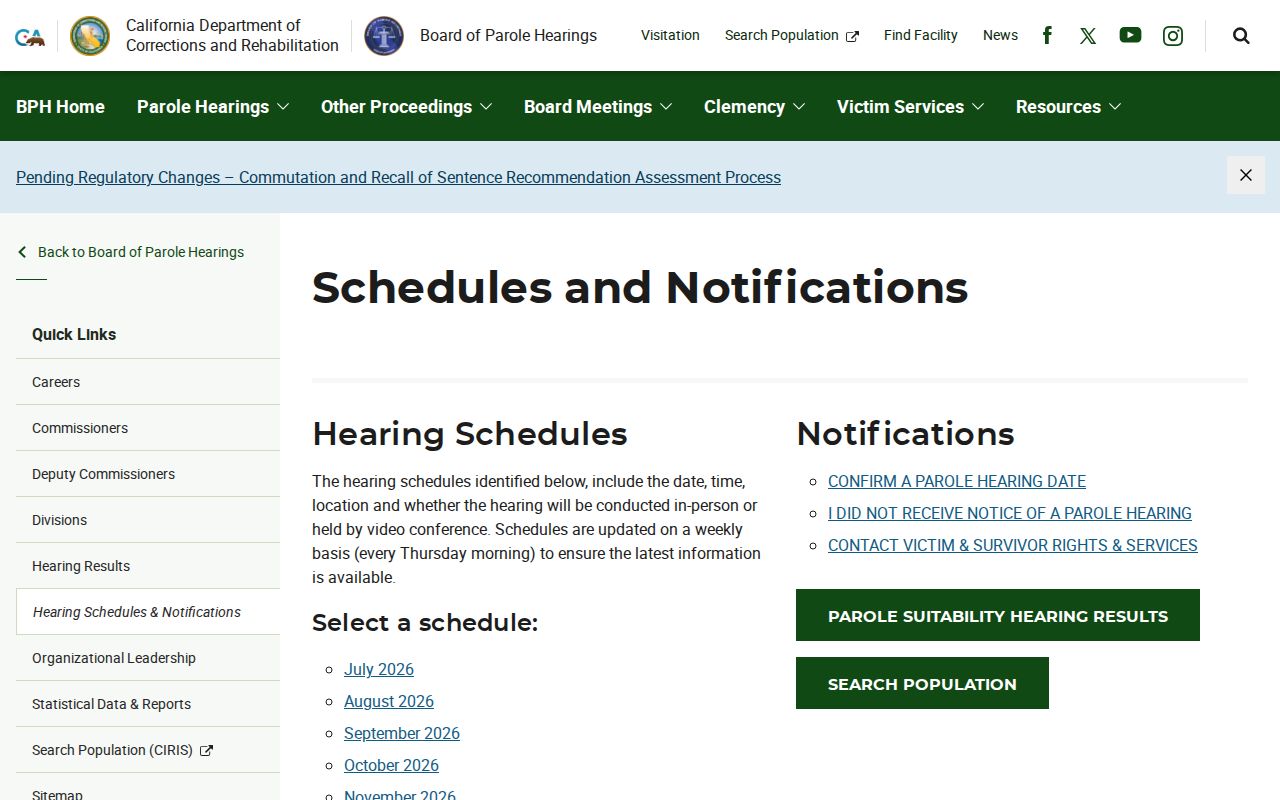
For state-prison parole matters, the California Board of Parole Hearings is separate from Sonoma County jail records. BPH hearing schedules include the date, time, location, and whether a hearing will be in person or by video conference. The schedule page says schedules are updated weekly, every Thursday morning. Search by the person's name or CDCR number if available, and compare the institution and commitment information before assuming the record belongs to the Sonoma case.
BPH hearing results are posted by week and can include grants, denials, postponements, waivers, stipulations, cancellations, or other procedural outcomes. A scheduled hearing is not a release date. A grant can still involve review and timing steps, while a denial or postponement generally means the person remains in state custody unless another legal release path applies.
Sonoma Reentry Landscape
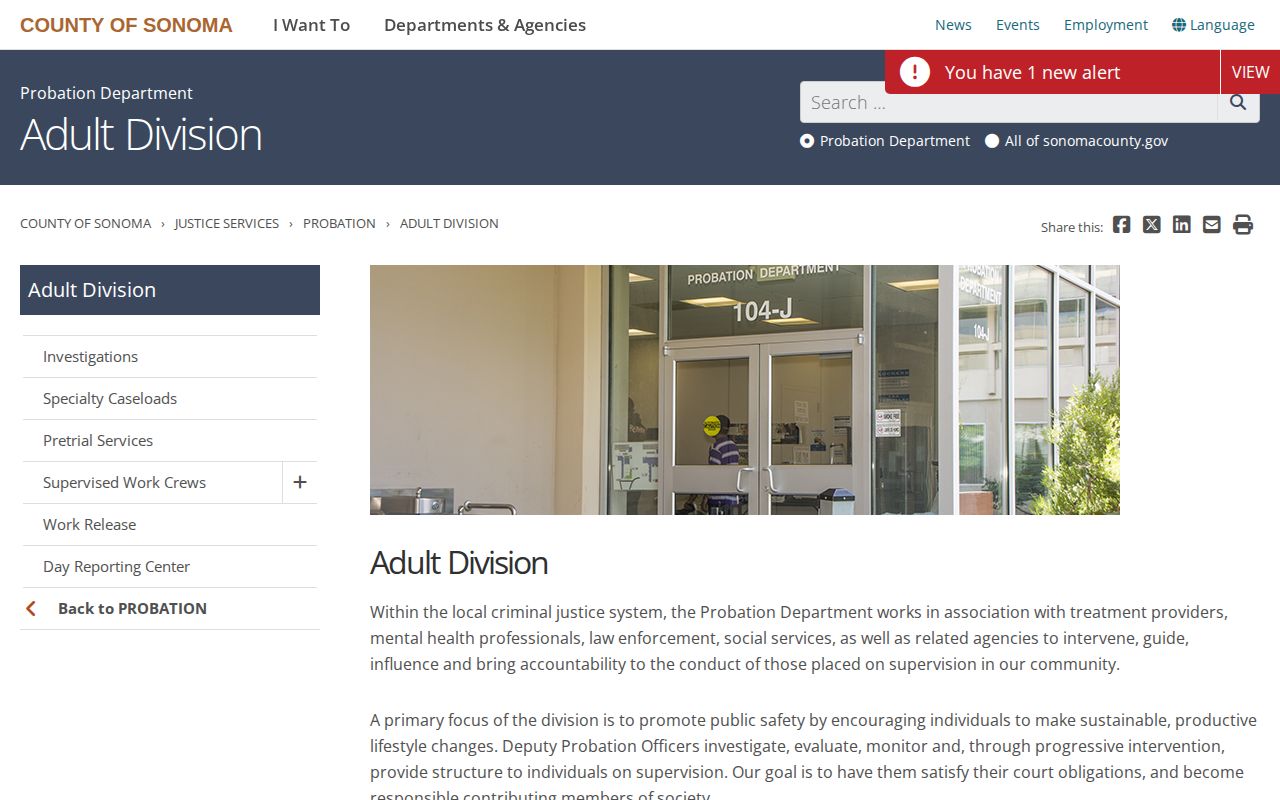
Sonoma's local supervision landscape is broader than a single probation desk. The Probation Adult Division describes work with treatment providers, mental health professionals, law enforcement, social services, and related agencies. The county also documents a Day Reporting Center and Work Release program. The Adult Probation Handbook identifies PRCS and mandatory supervision as post-custody community-supervision categories.
That local context matters because "released" can mean movement into a structured community program rather than completion of all obligations. Work Release is a post-conviction jail-alternative program operated by Probation when referred by the court. PRCS is supervision after a qualifying state-prison release. Mandatory supervision follows a split sentence. The public record most likely to name the category is the Sonoma Superior Court case, while the operating supervision agency holds current supervision details that may not be fully public online.
Ending Supervision
Supervision ends through the agency and court process that created it. Probation may terminate by court order, expiration, modification, or another court disposition. PRCS and mandatory supervision should be checked through Sonoma County Probation and the criminal case. Parole discharge or return-to-custody issues belong to CDCR DAPO, CDCR records, and sometimes BPH.
California public-records law supports access to specified arrest and booking facts, but it does not make every supervision note public. Juvenile, sealed, dismissed, medically confidential, safety-sensitive, and active-investigation records can have access limits. For a release date or release reason, ask for the Sheriff's booking/release record; for sentence and custody-credit details, use Sonoma Superior Court; for state-prison release and parole status, use CDCR and DAPO.
Sonoma Supervision Records
Supervision records should be matched to the agency that created the supervision. A Sonoma probation term is usually tied to the Superior Court case and the Probation Department. A CDCR parole term is tied to state-prison release and DAPO. PRCS can involve a state-prison release but local probation supervision. Mandatory supervision comes from a split sentence ordered by the court. Those labels are not interchangeable.
For release confirmation, use the jail or CDCR release record first. For the supervision status after release, use the court case, probation contact, DAPO contact, BPH record, or warrant search depending on the supervision type. This prevents a released person from being described as free of all conditions when a court or supervision agency still has authority.
Public Record Search
Sponsored Results